

+39 06 68 40 741 scolopi@scolopi.net
 Everlasting Joy

 Everlasting Joy

Dear brothers and sisters, today we celebrate the Third Sunday of Advent, Gaudete Sunday, the Sunday of Joy—the joy that comes from knowing that Christ is with us. This joy is not just any kind of joy: it is not the joy of pleasure, nor the satisfaction we feel after achieving a goal. Such joys can easily be taken away by bad news or difficult circumstances. The joy we celebrate today is deeper. It is an interior disposition that flows from the presence of Christ in our lives. It is the joy that remains even in the midst of struggle, pain, illness, and uncertainty, the joy of Christ dwelling within us. Saint Paul, writing to the Philippians from prison, exhorts them: “Rejoice in the Lord always; again, I say, rejoice.” The coming and the presence of Christ bring joy to our hearts, to our families, and to our communities. 

In the first reading, the prophet Isaiah speaks of everlasting joy and describes the signs that will accompany the coming of the Lord: “The eyes of the blind shall be opened, the ears of the deaf unstopped; then the lame shall leap like a deer, and the tongue of the mute shall sing for joy.” These are signs of God’s saving presence among His people. Yet, in our own lives, we may sometimes feel that this joy is absent. We may say that we see no signs of Christ’s coming because we are burdened by struggles: ongoing suffering, persistent bad habits, marital or family problems, or illnesses that remain uncured. In such moments, we may begin to question the presence of Christ in our lives. 

This questioning is reflected in today’s Gospel. John the Baptist, while in prison, sends his disciples to Jesus to ask, “Are you the one who is to come, or should we look for another?” Just the previous Sunday, John boldly proclaimed that Jesus is the Christ. Yet now, in a moment of hardship and imprisonment, doubt enters his heart. Like John, when we face difficult times, we too may question whether Christ is truly present with us. 

However, Christ is always present in our lives, in every situation. In the second reading, Saint James encourages us to be patient and not to complain when things do not go as planned. As Saint Paul reminds us elsewhere, “All things work together for good for those who love God.” Still, Christ may be present and yet we fail to recognize Him. Jesus responds to John’s disciples by inviting them to look and see for themselves: the blind see, the lame walk, 

the deaf hear, and the poor have the Good News proclaimed to them. In the same way, Jesus invites us to look closely at our own lives—to recognize the quiet but powerful ways He has been at work. He asks us to remember what He has done throughout this year: in our lives, in our families, in our children, our spouses, and our communities. By reflecting on these moments of grace, we can confirm His living presence among us. 

Therefore, dear brothers and sisters, our waiting for the coming of Christ is also a time of remembrance and gratitude, a time to see what the Lord has done for us and to give thanks. During this Mass, let us pray for the everlasting joy spoken of by Isaiah, so that even in the midst of struggles and suffering, we may remain joyful in the Lord. We ask this through Christ our Lord. Amen. 
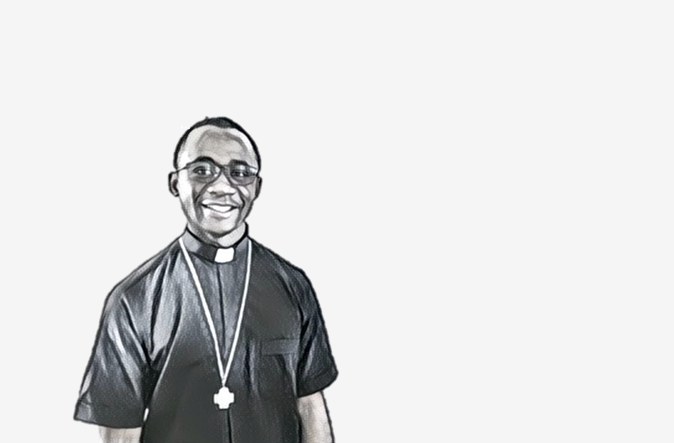
NGALA AUSTIN KANJO

NGALA AUSTIN KANJO

Piarist

Ngala Austin Kanjo is a religious and priest in the Order of the Piarist Schools from the Province of Central Africa. Born in Shisong, Cameroon. He is currently undergoing a master’s program on formation of formators at the Gregorian University.


In His Days, Justice shall flourish and Peace till the moon falls

In His Days, Justice shall flourish and Peace till the moon falls

Dear brothers and sisters, I would like us to begin our meditation with today’s Psalm: “In his days justice shall flourish, and peace till the moon fails.” As we prepare for the coming of Christ, let us keep this Psalm close to our hearts. In his days, in the presence of Christ, justice shall flourish and peace shall reign. There can be no room for Christ and injustice together, no space where Christ and hatred coexist. 

In the first reading, the prophet Isaiah presents the harmony that comes with the presence of the Messiah. He speaks of a world without contradiction: “The wolf shall live with the lamb; the panther lies down with the kid; the calf and the lion feed together; the lion shall eat straw like the ox. The infant shall play over the cobra’s hole; into the viper’s lair the young child shall put his hand.” In ordinary life, we cannot imagine a wolf living peacefully with a lamb, or a lion working alongside a calf. But where Christ is present, hatred disappears, and injustice loses its power. As Psalm 16:11 reminds us, “In the presence of the Lord there is fullness of joy.” 

Dear Christians, many of us-if not all-long for this joy, this peace, this love: in our hearts, in our families, and in our country. Only in Christ can we find true joy, true peace, true love, for Christ is the fullness of God’s grace given to us. In his days justice shall flourish and peace till the moon fails. However, dear brothers and sisters, Christ is already present among us. He promised in Matthew 28:20, “I am with you always, until the end of time.” The real question is: are we present to Him? This is the meaning of Advent: not merely waiting for Christmas as a date but preparing ourselves to be present with the Lord once more. Christmas is symbolic, yes, but in the wisdom of the Church it becomes a moment of renewal, an opportunity to return to Christ with our whole heart. To be with Him means to examine our lives and see where we must change, because sin distances us from God. 

This is why, in today’s Gospel, John the Baptist tells the Pharisees and Sadducees to produce good fruit as evidence of their repentance. During these weeks of Advent and throughout the Christmas season, what will be the evidence of our repentance? Will there be a real change in our behavior, in our homes, in our relationships? Or will we celebrate Advent and Christmas as many do who do not know Christ? 

In the second reading, Saint Paul encourages the Christians of Rome to give thanks and glorify God, for sustaining them in faith, for helping them remain patient, tolerant, and charitable toward one another. In the same way, Advent and Christmas are not only times for conversion, but also moments to look back on the year with gratitude: to thank God for life, for our successes and failures, for the grace that carried us through challenges, and equally to thank our parents, grandparents, brothers and sisters, and friends for their love, support, and presence. In his days justice shall flourish and peace till the moon falls. This “day” is not only in the future, but it also begins now, in our lives, in our families, in our communities. Let us ask the Lord to fill our hearts, our homes, and our community with His joy, His peace, His wisdom, and His love. 

NGALA AUSTIN KANJO

NGALA AUSTIN KANJO

Piarist

Ngala Austin Kanjo is a religious and priest in the Order of the Piarist Schools from the Province of Central Africa. Born in Shisong, Cameroon. He is currently undergoing a master’s program on formation of formators at the Gregorian University.
Stay Awake

Stay Awake

Dear brothers and sisters, I wish to propose to start this season of advent, meditating on the theme “staying awake”. The term advent means “coming”, the coming of our Lord, Jesus Christ. This annual celebration is not a casual act put for granted but a moment put during the year to remind us that with the coming of Christ in the world through incarnation, hope, God’s consolation comes to us amidst our tribulation, suffering, pains, struggle, misunderstanding, difficulties etc. However, this coming equally reminds us to “stay wake” or better still “to be vigilant”. This does not mean, being physically awake but having one’s heart free and facing the right direction. Our hearts sometimes are made asleep by our sins, weaknesses or by the tempting offers of the World. Pope Francis says the slumbers which we must awaken is constituted of indifference, of vanity, of inability to establish genuine relationships. The readings of today invite us to stay awake. 

In the gospel, Jesus uses the scenario of Noel to remind us of constant vigilance. Before the flood, men were eating and drinking, marrying and giving in marriage, up to the day that Noah entered the ark. They did not know until the flood came and carried them away. They gospel tells us that “they did not know”, they were indifferent. Sometimes we are immersed in time that we forget eternity. We go on with our daily workings and entertainment that we forget eternity, taking care of the body and forgetting the soul, taking care of external factors and forgetting our inner life. Staying awake means being vigilant on those things that dull our hearts. Saint Paul in the Second reading, will say that it means, throwing the works of darkness and putting on the armor of light, conducting ourselves properly as in the day, not in orgies and darkness, not in promiscuity and lust, not in rivalry and jealousy but putting on the Lord and making no provision for the desires of the flesh. 

Therefore, as the first reading from the book of the prophet Isaiah says, let us climb the mountain of the Lord, so that he may instruct us on his ways and make us walk in his path. For from Zion shall go forth instruction and the word of the Lord from Jerusalem. This instruction is actualized in the teachings of Christ to us which is found in the bible. Let us, throughout this moment of advent, with the help of the bible, interrogate ourselves on what might be causing our spiritual drowsiness; distractions and temptations that anesthetize our hearts. Furthermore, not only being aware of these areas that causes spiritual sluggishness but making small but constant efforts to become  better persons. Let us equally ask God for the strength and grace to stay awake amidst various temptations, through Christ our Lord. Amen. 

NGALA AUSTIN KANJO

NGALA AUSTIN KANJO

Piarist

Ngala Austin Kanjo is a religious and priest in the Order of the Piarist Schools from the Province of Central Africa. Born in Shisong, Cameroon. He is currently undergoing a master’s program on formation of formators at the Gregorian University.

The Kingship that comes from the Cross

The Kingship that comes from the Cross

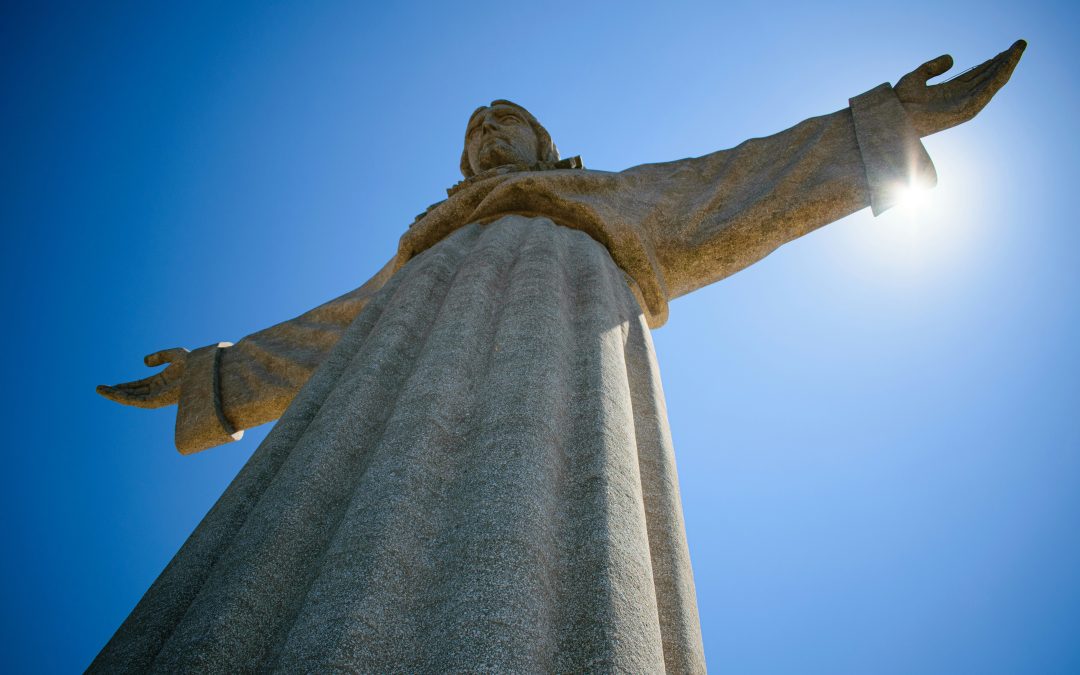
Dear brothers and sisters, we celebrate the solemnity of Our Lord Jesus Christ, King of the Universe. It is not only a feast of Our Lord Jesus Christ, but equally the feast of all Christians, because by the virtue of our Baptism, we are priest, prophet and Kings. The feast of Christ the king is thus a good moment to reflect the meaning of our kingship. Our Kingship must reflect the kingship of Christ. The gospel of today presents the kingship of Christ, not as a kingship of external domination nor of destruction or revenge as was being expected by those at the foot of the Cross. The gospel presents to us four group of people during the crucifixion of Jesus Christ: the crowd, the leaders, the soldiers and the two thieves. The Gospel tells us that the people stayed before the cross, watching Jesus. Watching means observing if the man who performed a lot of miracles, that called himself Son of God would get angry or provoked or fight back. That’s why the other three group impatiently started provoking to see his reaction. The leaders jeered at him saying “He saved others, the said, let him save himself if he is Christ of God, the Chosen One”, the soldiers mocked him saying “if you are the king of the Jews, save yourself” and lastly one of the Criminals said “Are you not the Christ? Save yourself and us as well”. The question we should ask ourselves is, if I was hanging on the cross in the place of Jesus, with all the power he had and the provocations coming from people you are saving, what could you or I had done? It happens in our life today, we are sometimes provoked to do evil in many ways, by different people, our family, our wife, husband, children, friends. What is usually our reaction as Christian in such situations? Jesus had all the power but decided to remain faithful to God and to his mission to save humanity. This is where the kingship of Christ comes from, faithful to God and to the mission entrusted to him no matter the evil traps. As Christians, as king we need to remain faithful in doing good, in being good no matter the temptation the world present to us to do evil. We are not good because others are good to us but because Christ has been good to us. Our goodness doesn’t depend on others but on our identity as Christians. Through us, people find unity, joy, peace, and love. This is what we see in the first reading, with the Kingship of David. 

In the first reading, we see how through David, all the tribes of Israel united, (the Northern and the Southern Kingdom). This becomes a prefiguration of Christ in which everything is united in him. Through Christ, all of us become sons and daughter of God. As sant Paul say there is no more 

Jew, Pagan, European or American, African or Asian, but Christ. As Christian we become a new creation, the holy saints of God. As saint Paul says in the Second reading, God wanted that all perfection to be found in him and all reconciled through him and for him, everything in heaven and everything on earth, when he made peace by his death on the cross. By death on the cross, we become a new creation that promotes peace, unity, love, justice. It is not an easy journey but being in church today is sign we are ready to become bearers of this message through our way of living. As the psalmist says, “I rejoice when I heard them say, let us go to God’s house”. Being in his house, let us ask God to give us the grace to become Christians in all seasons. 

NGALA AUSTIN KANJO

NGALA AUSTIN KANJO

Piarist

Ngala Austin Kanjo is a religious and priest in the Order of the Piarist Schools from the Province of Central Africa. Born in Shisong, Cameroon. He is currently undergoing a master’s program on formation of formators at the Gregorian University.

Endurance and Fidelity in Christian Life Amid Trials

Endurance and Fidelity in Christian Life Amid Trials

Dear brothers and sisters, as we approach the end of the liturgical year, the readings invite us to reflect on our dispositions as Christians amid struggles and suffering. Human life is indeed marked by trials and difficult moments, that cause a lot of anxiousness and search for quick remedies. Unluckily many progressive preachers profit to treat prayers as “tablets” that instantly removes every problem. The Gospel of today teaches us something different. Christ tells us today that suffering, human struggle, pain etc. is not a sign the absence of God, nor is a sign we are not praying well or we are evil. God is always with us even in our suffering state. What we need to do is to entrust our struggle to him and live according to his teachings. To live in truth, in justice, in love, and in charity will not always make us popular. In fact, we may be criticized, mocked, or misunderstood. People may say to us: Who do you think you are? Do you think you are the first to be kind, honest, or charitable?” Jesus himself warns us in today’s Gospel that following him may even bring betrayal from family, friends, and those we love. We may be hated simply because we live according to the way of Christ and uphold the moral values of the Gospel. But he equally tells us to keep in mind that we are not to prepare our defense beforehand, because he himself shall give us eloquence and wisdom that none of our opponents will be able to resist or contradict. He might not take away our suffering, but he will give us courage, wisdom and strength to face it. The problem is, sometimes out of egoism and because we need acceptance and to be feel loved, we compromise Christian and moral values, we conform with others to act in injustice, evil, lies. How often have we changed our decisions, acted against our conscience, or conformed to the expectations of others—family, friends, or society—even when we knew these choices contradicted Christian values and the demands of justice and charity? Out of fear or convenience, we may sometimes cooperate with what is wrong. Today, the Lord calls us to say “No” to evil and “Yes” to the path of Christ. Jesus assures us: “Not a hair of our head will be lost.” He invites us to trust in him and to endure, for “by our endurance we will gain our lives.” 

In the first reading, God reminds us that our choices have consequences. Those who choose evil, arrogance, or injustice, those who harm others without remorse—will face the bitterness of their actions. But those who persevere in doing good, living according to Christ, will receive a glorious reward. As the psalmist says: “The Lord comes to rule the peoples with  fairness.” However, being Christian does not mean spending all our time in church, escaping from the world, or living a strange, overly spiritualized and isolated life. The second reading teaches us that we must work, contribute to the development of our families, society, and country. Christian life is not idleness; it is a life that evangelizes through action, through daily work done with integrity, love, and justice. Let us therefore ask the Lord to give us the grace to persevere, to remain faithful witnesses to his love, truth, and justice in the moments when it is hardest to do so. Amen 

NGALA AUSTIN KANJO

NGALA AUSTIN KANJO

Piarist

Ngala Austin Kanjo is a religious and priest in the Order of the Piarist Schools from the Province of Central Africa. Born in Shisong, Cameroon. He is currently undergoing a master’s program on formation of formators at the Gregorian University.

Panorama Calasanz
Resumen de privacidad

Este sitio Web utiliza cookies para mejorar su experiencia mientras navega por el sitio Web.

Fuera de estas cookies, las cookies que se clasifican según sea necesario se almacenan en su navegador, ya que son esenciales para el funcionamiento de las funcionalidades básicas del sitio Web.

También utilizamos cookies de terceros que nos ayudan a analizar y comprender cómo utiliza este sitio Web. Estas cookies se almacenarán en su navegador solo con su consentimiento.

Tiene la opción de optar por no recibir estas cookies. Pero la exclusión voluntaria de algunas de estas cookies puede afectar su experiencia de navegación.