
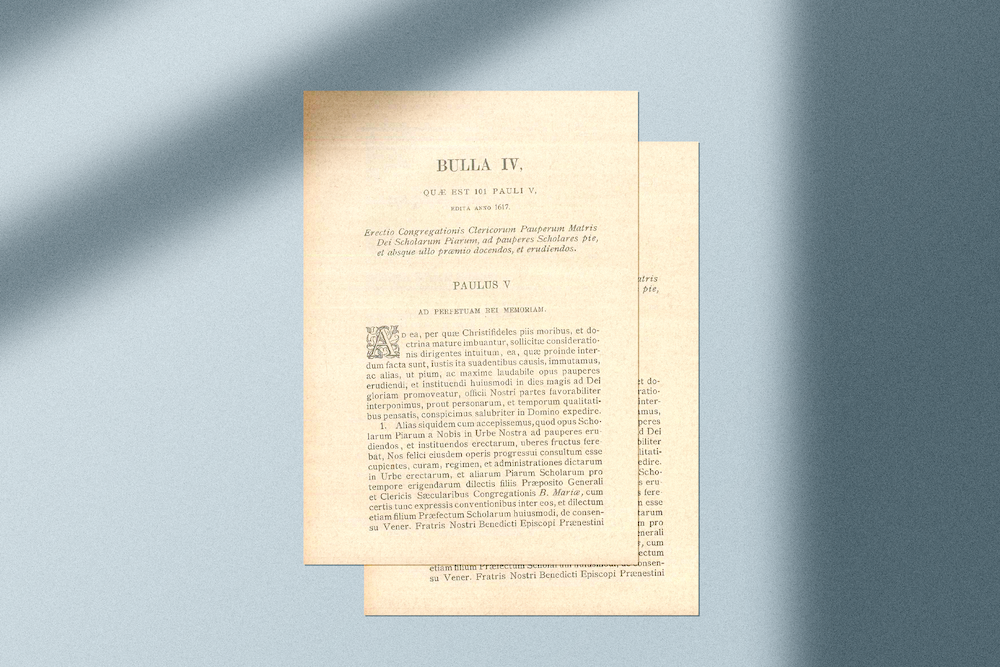
… When they agreed …. 1617: Ad ea per quae
Today, history is made. The Universal Church agrees with a single person. Poor children and youths were given values, and education was approved. Voice is given to the voiceless. Calasanz, “old as he was, and with a poor health condition”, began to worry about the future of his Schools. In 1614, he thought that the religious of Our Lady of Luca could guarantee a proper future for them, but the experience was unsuccessful. After series of struggles, He finally listened to the voice of the Holy Spirit and decided to found his own Religious Institute, convinced of the fact that this will lead to the acquisition of good teachers, who in turn would be more constant in their ministry and education of the children. In 1617, Pope Paul V gave his approval to the “Pauline Congregation of the Poor of the Mother of God of the Pious Schools” AD EA PER QUAE… the most worthy of thanks, the most noble and the most angelic work was made flesh… Memorandum to Cardinal Tonti.
The creation of a world starts with a personal conviction… To us followers of Calasanz, we are simply called to agree with one another, and take the work ahead, irrespective of our indifferences, cultural backgrounds and various challenges. Let us then celebrate those diversities, for we have a great Founder who was attentive to the signs of time. His secret was simple: He was reliable to the Divine Providence and the strength of those that surrounded him. History reminds us that the Church revitalized and fostered the life to the young and the children through the inspiration of Calasanz. we are therefore called to be givers of life in our various fields of work.
Pope Francis in addressing the young people in Christus Vivit, called them the NOW of God… that which had long been predicted by Calasanz. Thus, in building up our faith, we should never get discouraged because the journey of a thousand miles starts with a step…
Therefore, I invite all those who are attracted by the educational charism of Saint Joseph Calasanz to come closer, and get to know not only the mind and thoughts of the Founder, but also the works carried out by the Piarist Fathers through history, which have contributed in keeping alive and flourishing the inspiration Calasanz received. As this changed and adapted with time, there is no doubt that we are able to see the work of the Holy Spirit. It remains our task to discern between those “real adaptations” and “healthy traditions” on the one hand, and those which are not on the other, because we too have received the gift of the Holy Spirit.1
Uwanuakwa Isidore Chinemelum Johnberchmans of the HandMaid of the Lord Sch.P
1 ANTONIO LEZÁUN, The History of the Order of the Pious Schools (A Handbook), 2010, P16.
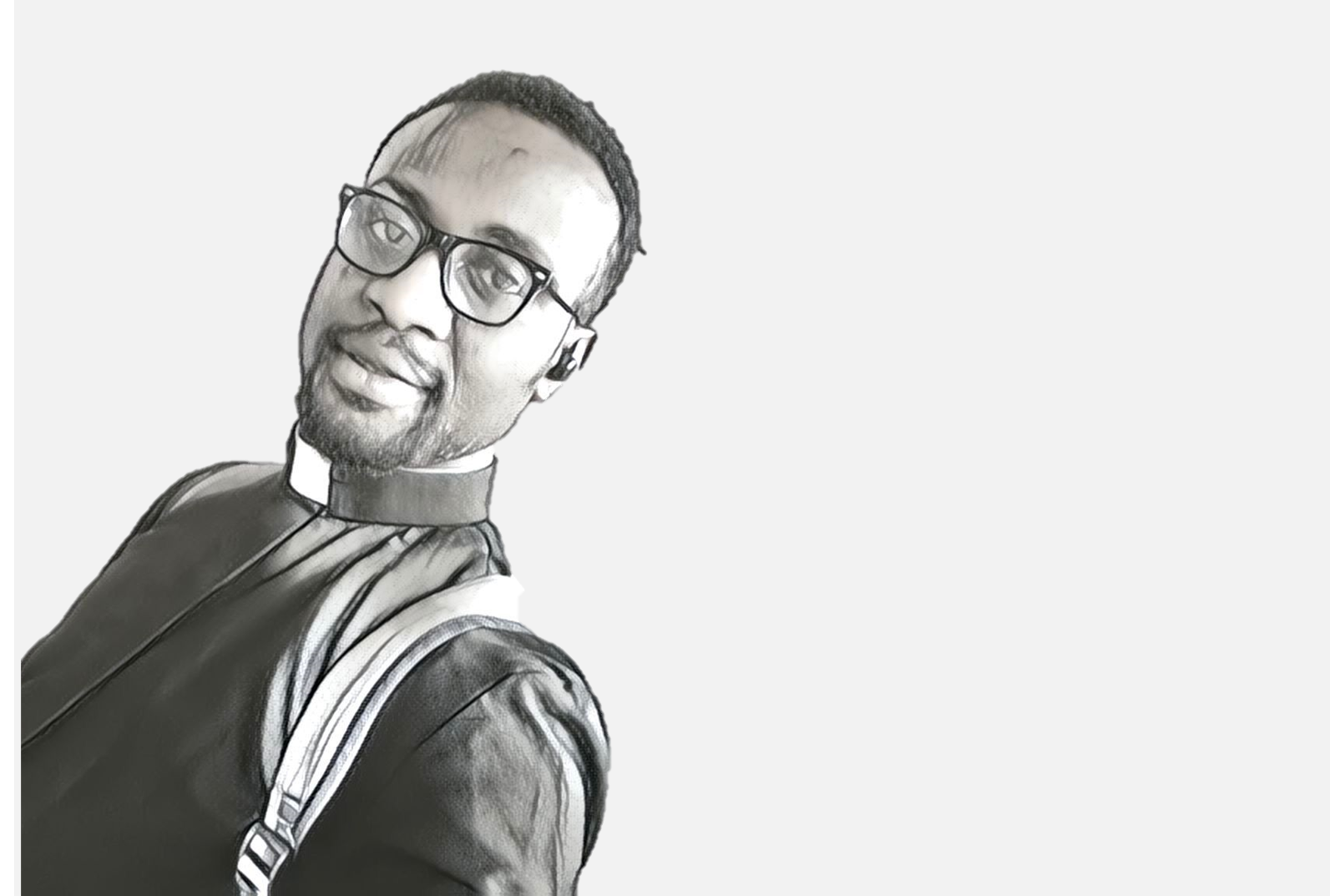
ISIDORE CHINAEMELUM
Escolapio
Isidore Chinaemelum es natural de Akaokwa (Nigeria). Actualmente estudia teología en la Universidad Católica de África Central en Yaundé. Obtuvo su primera licenciatura en Filosofía de la Educación en la Universidad Católica de Bamenda. Ha publicado un libro y un número considerable de artículos sobre diversos temas y colabora en varias revistas. Es una persona joven, alegre y seria que ha encontrado en la lectura y la escritura la mejor manera de reconciliarse con su afición más íntima y florecer.