
+39 06 68 40 741 scolopi@scolopi.net
Polvo y ceniza. Dust and Ash

Polvo y ceniza. Dust and Ash

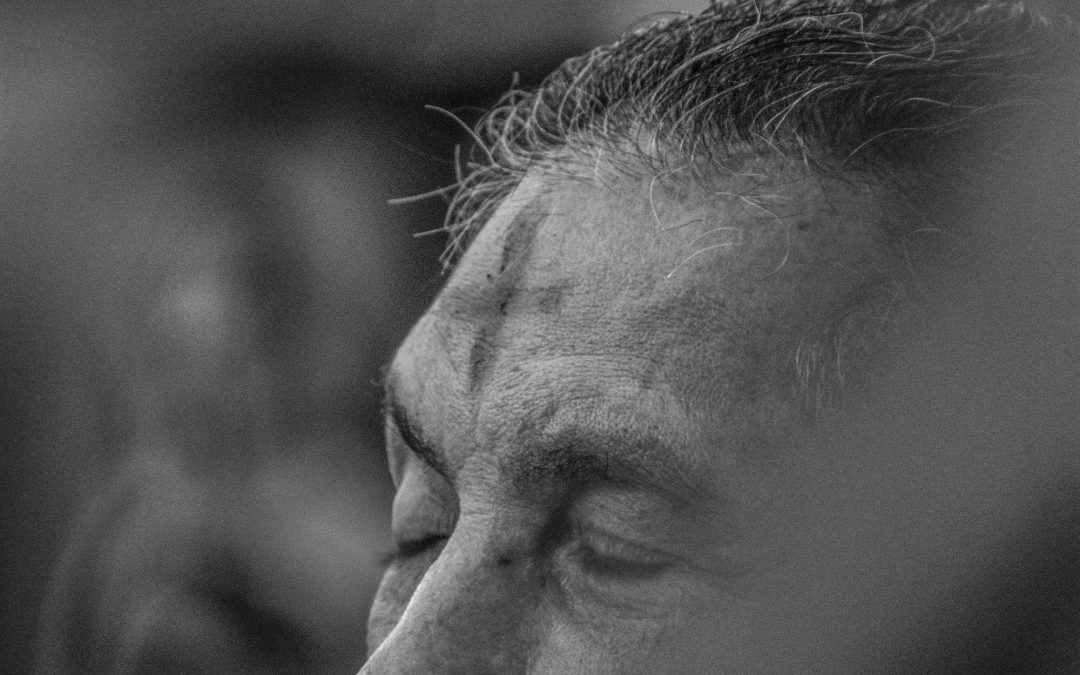
¿Qué significa que en este día nos echemos ceniza sobre la cabeza? ¿Por qué lo hacemos? ¿Por penitencia? ¿Es por razones ascéticas, para mortificarnos, para azotar «nuestros cuerpos»?

Un buen punto para cuestionar nuestras suposiciones habituales podría ser el momento en que nos damos cuenta de que se trata del Evangelio, una buena noticia, algo que quiere liberarnos. Nos llama a la conversión, es decir, a un «giro», a una vuelta a casa.

Así pues, puede que merezca la pena profundizar en este simbolismo, en el ritual de esparcir cenizas sobre nuestras cabezas, para entenderlo como la fuerza liberadora que pretende ser.

1.

El otro día me encontré con uno de nuestros religiosos que trabaja en un colegio dirigido por otra congregación. Es una escuela prestigiosa que quiere proteger su reputación por buenas razones, al menos eso creen sus responsables. Por eso se cuidan demasiado de cometer errores. ¿Y qué ocurre cuando una escuela es demasiado cautelosa a la hora de cometer errores? Deja de ser una escuela. El incidente del que me habló este escolapio es un buen ejemplo.

Hace poco murió uno de los alumnos. El sistema de defensa de la dirección del colegio se activó de inmediato. Temían el posible impacto negativo en los alumnos si se les hablaba de la muerte de su compañero. Finalmente, decidieron disimular lo mejor que pudieron y ocultar la muerte a los alumnos.

Ahora bien, el Miércoles de Ceniza hace justo lo contrario. Habla de la muerte. Es más, te dice sin tapujos: «Vas a morir». Es mejor conocer tus coordenadas: «Sois polvo y en polvo os convertiréis».

¿Qué ocurre si no conoces tus coordenadas? ¿Qué pasa si caminas por un terreno con el mapa equivocado en la mano?

Decirte: «Morirás», significa darte el mapa correcto. Significa abrirte los ojos. Significa llamarte a salir de un mundo de apariencias y fantasías. Significa decirte la verdad.

  1.  

Es importante señalar, sin embargo, que ésta no es ni la última ni la única palabra que se nos dice el Miércoles de Ceniza. Cuando el celebrante esparce la ceniza sobre tu cabeza, está frente a ti, hablándote, en una relación comunicativa contigo. Además, te lo dice en el seno de una comunidad.

Es en la comunidad reunida en torno a Cristo resucitado donde se te dice esto.

Esto es lo que somos. En esto consiste la humanidad. Todos somos mortales, todos somos frágiles, todos estamos desnudos.

El Miércoles de Ceniza es una invitación a aceptar esta verdad.

Nuestra reacción normal al estar desnudos o sentirnos desnudos es la vergüenza. Es una reacción que va más allá de tomar conciencia de nuestra fragilidad y vulnerabilidad. De alguna manera, también nos sentimos culpables por ser así.

Por eso, la vergüenza, junto con ese sentimiento de culpa, puede ser una fuerza poderosa que nos haga huir, cubrirnos, no tomar conciencia.

Jesús, el Resucitado, nos dice: «No tengáis miedo. Miradme. Mirad mis manos, mis pies, mi costado, mirad mis heridas. Yo estoy con vosotros. Estoy vivo. ¿Dónde están tus acusadores? Yo no te condeno. Estoy aquí para darte la vida».

  1.  

De polvo sois y en polvo os convertiréis. No se trata de una humillación, sino de una llamada a la humildad. Es decir, a tomar conciencia de la propia fragilidad, de la propia desnudez, y a aceptarla. Pero también es una llamada a ser conscientes de quién nos lo dice.

Es Dios quien, al hacerse hombre, se convierte en uno de los pequeños que te lo dice.

Por eso hablaba Calasanz de humildad en aquella famosa carta a un correligionario que ansiaba volver a España, su patria, desde el Nápoles extranjero donde no se sentía a gusto, y que ya había hecho gestiones para entrar en otra congregación «por una imaginada mayor tranquilidad», como dice Calasanz. Como los ancianos del desierto, nuestro Fundador quiere sacar a este hermano de su mundo imaginario. Tal vez no le exhorta tanto a la humildad como le recuerda que el lugar del autodescubrimiento no está en la imaginación sino en la realidad: con los niños pobres a los que, cuando se abaja para darles luz, puede estar con Dios.

El mensaje del Miércoles de Ceniza es el mismo. Nos llama a este “camino o vía más breve y más fácil para ser exaltado al propio conocimiento y de este a los atributos de la misericordia prudencia e infinita paciencia y bondad de Dios”.

What does it mean that on this day we scatter ashes on our heads? Why do we do this? Is it for penance? Is it for ascetic reasons, to mortify ourselves, to scourge “our bodies”?

A good point to challenge our usual assumptions might be the point at which we realise that it is gospel, good news, something that wants to set us free. It calls us to conversion, that is, to a “turn”, to a homecoming.

So, it might be worth diving deeper into this symbolism, into the ritual of scattering ashes on our heads, in order to understand it as the liberating force it is meant to be.

  1.  

The other day I met one of our religious who works in a school run by another congregation. It is a prestigious school that wants to protect its reputation for good reasons, at least that is what those in charge believe. That is why they are overly cautious about making mistakes. And what happens when a school is overly cautious about making mistakes? It ceases to be a school. The incident this Piarist told me about is a case in point.

One of the students died recently. The school management’s defence system kicked in immediately. They were afraid of the possible negative impact on the students if they were talked to about the death of their comrade. Finally, they decided to cover it up as best they could and conceal the death from the students.

​Now, Ash Wednesday does just the opposite. It talks about death. More than that, it tells you quite blatantly, «You are going to die». It is better to know your coordinates: “Ye are of dust, and unto dust ye shall return.”

What happens if you do not know your coordinates? What happens if you walk through a terrain with the wrong map in your hand?

Telling you, «You will die», means giving you the right map. It means opening your eyes. It means calling you out of a world of appearances and fantasies. It means telling you the truth.

2.

It is important to note, however, that this is neither the last nor the only word we are told on Ash Wednesday. When the celebrant scatters ashes on your head, he is facing you, talking to you, in a communicative relationship with you. Moreover, this is being said to you in the heart of a community.

It is in the community gathered around the risen Christ that you are being told this.

This is what we are. This is what humanity is all about. We are all mortal, we are all fragile, we are all naked.

Ash Wednesday is an invitation to accept this truth.

Our normal reaction to being naked or feeling naked is shame. It is a reaction that is more than becoming aware of our fragility and vulnerability. Somehow we also feel guilty for being this way.

For this reason, shame, together with this feeling of guilt, can be a powerful force that makes us flee, cover ourselves, not become aware.

Jesus, the Risen Lord, tells us, «Do not be afraid. Look at me. Look at my hands, my feet, my side, look at my wounds. I am with you. I am alive. Where are your accusers? I do not condemn you. I am here to give you life.»

  1.  

Ye are of dust, and unto dust ye shall return. This is not meant as humiliation, but as a call to humility. That is, to become aware of one’s own fragility, one’s own nakedness, and to accept it. But it is also a call to be aware of who is telling you this.

It is God who, when he becomes man, becomes one of the little ones who tells you that.

That is why Calasanz spoke of humility in that famous letter to a fellow religious who longed to return to Spain, his homeland, from foreign Naples where he did not feel at ease, and who had already taken steps to enter another congregation «for an imagined greater peace of mind,» as Calasanz puts it. Like the old men in the desert, our Founder wants to bring this brother out of his imaginary world. Perhaps he is not so much exhorting him to humility as reminding him that the place of self-discovery is not in imagination but in reality: with the poor children to whom, when he lowers himself to give them light, he can be with God.

The message of Ash Wednesday is the same. It calls us to this “shortest and simplest way to be raised to our own knowledge and from it to the attributes of mercy, prudence and the infinite patience and goodness of God”.

József Urbán

József Urbán

Piarist

A Hungarian Piarist, he is a teacher of English and Religion. For two terms, he was provincial of the Province in Hungary. At present, he is general assistant of the Order, responsible for Asia.

Is Jesus calling you to be an influencer? Is influencer the new “fishers of men”?

Is Jesus calling you to be an influencer? Is influencer the new “fishers of men”?

My short answer to these questions would be, I have my doubts. A slightly longer answer would be to ask my questioner to take a closer look at the text of Luke’s Gospel and see what Jesus did when he called these fishermen to be “fishers of men”.

Even before looking at the text, however, it is worth noticing that there have never been official “fishers of people” in the Church. Such a designation is and has been totally absent in the community. It never became a title or the name of a group of ministers. It did not survive the immediate period of the first transmission of the Gospel.

Why is that? It is difficult to tell. What we know for sure is that there are, already in the Gospel of Luke, important changes, modifications to earlier versions of the scene. It may well be that already the first Christians, Luke included, had the impression that the imagery of the expression is a bit strange, or even that it expresses something which, on second thoughts, is quite contrary to what is meant to be the mission of the followers of Jesus. For to catch fish amounts to taking them out of the medium where they can live. Whereas preaching the Good News as Jesus does is calling people into the Kingdom, helping them to reach life, transferring them into a lifegiving medium.

It is exactly this aspect which gets emphasis in the modified imagery conveyed by the verb Luke employs. Instead of speaking about “fishers”, as the other synoptics do, he uses the verb “zōgréō” (ζωγρέω). This verb is put together of two words: “zōos”, meaning “alive, living” and “agreúō”, which means “to capture”. Thus, the whole idea suggests something like “to catch alive” or “to catch to life”.

What is important for us to notice here is the fact that the original imagery of fishing people was changed as much as possible to introduce the idea of life, of bringing to life. At the same time, the other component, that is, the movement or the gesture of seizing, of grasping, which indicates external force and constraint, is relegated into the background.

It is equally important to notice that, with this modification, Luke is, in fact, following the direction of the movement that the original imagery implied. Let me explain.

Jesus is calling the disciples to leave behind the activity they got used to and from which they made their living. In short, he calls them to leave behind their identity. And he is doing it in a gentle way, coming as close to them as possible, using an imagery they can immediately understand. Jesus opens for them a new horizon. While in their previous activity it was their own life which was put at the focus, now Jesus invites them to another kind of activity, not focussed on themselves, on their own life, but on others. Jesus invites them to a new “job”, a new identity. That is the thrust of the original image that Jesus uses. He speaks about “people”: it is “human beings” (ἀνθρώπους) that they are invited “to be fishers” of.

Simply, but ingeniously, Luke resumes this movement, the direction implied in the metaphor of “fishers of people”. His innovation – that is, adding that bizarre verb, “zōgréō”, or “catch to life”, that we have already analysed – successfully maintains the metaphorical force of the original imagery and takes away as much as possible of the residue of any implications of an external or violent activity.

It is hard not to see in the effect of this double metaphorical novelty the real message. As our attention is driven away from an activity which is inherently external and aggressive, dealing with objects (“fishing”), we come to discover people in need of life. This is what Jesus is calling the disciples to do. And this is what the Gospel story calls us to do.

Jesus calls us to leave behind any activities and any methods that are appropriate for objects because they serve us and our needs. Activities that follow the logic of production and whose success is expressed in numbers and statistics. Ultimately, Jesus calls us to leave behind any identity – and any activity flowing from such an identity – that is closed because concerned about gaining power over others to establish itself.

Is being an influencer about giving life? Is being an influencer congruent with not using methods that degrade people into objects, methods that are ultimately violent? Is being an influencer not about reaching goals that have to do with gaining power? Is being an influencer about truly wishing that the other grow in freedom? Whatever the answer to these questions, one thing is clear.

We are called to discover people in need of life. And we are called to discover this activity as a new vocation: an activity that gives us a new identity, an activity that gives life to us as well.

You can be a life-giver. Be one. Discover people in need of life.

József Urbán

József Urbán

Piarist

A Hungarian Piarist, he is a teacher of English and Religion. For two terms, he was provincial of the Province in Hungary. At present, he is general assistant of the Order, responsible for Asia and is vice-provincial of the Vice-Province of India.

Why follow Jesus? ¿Por qué seguir a Jesús?

Why follow Jesus? ¿Por qué seguir a Jesús?

Is my following of Jesus real? Is my life real?

 The pressing question inevitably comes, and surely at one point or another of our lives we all have asked it and maybe several times, even several times a day: “Is it real? How can I make sure it is real? How to make it serious and real?”

The question of course refers to what we do, what we live: to ourselves.

Recently, someone has posted on Twitter the following:

Jesus didn’t ask to be let in to people’s hearts; he told them to follow him –dedicating his life to the most vulnerable in society.

Following Jesus wasn’t a call to a private piety disconnected from society.

Following Jesus was relational, social, and it involved justice.

This post has gained considerable traction on social media. No wonder as it lets a true and valid tension appear. A tension that perhaps is not to be resolved but rather exposed and maintained. A tension we should always sustain and bear it challenging us.

As a constant challenge, it propels us even to reformulate it. Because maybe the real question is not so much whether to follow this Jesus dedicating his life to the most vulnerable, but how to let him and the vulnerable in society into my heart. How to make it real for me? How to make it true?

And then we are pressed to move ahead with our questioning: How to really make a difference in the lives of the most vulnerable? How to make a difference that makes sense? How to reach their hearts? How can I be let into other people’s hearts?

All these questions, it seems, lead to this one: Why follow Jesus? Why let him into our hearts?

There is no following of Jesus without a personal encounter with him. And there is no personal encounter with Jesus without being ready to meet his brothers and sisters. It is the same calling. When Jesus calls you to meet and follow him, he calls you to “come and see”, and it is impossible to see him without seeing all these who “are my brothers and sisters and mother”.

Jesus is calling us to meet and follow him, from within a community. A community that he has created by accepting them, by recognizing them as “my brothers and sisters”. In fact, the gesture of the calling we receive form him is the same gesture with which he recognizes us as his brother or sister.

And exactly that is the point.

It all begins with a seeing. Even before the calling! It all begins with Jesus seeing us. By seeing us, he recreates us, and by calling us, he reveals to us who we are, who this “we” really is.

And probably this is the answer to the “why” asked above. I want to let Jesus into my heart and I am ready to follow him because it is all about this recognition of me as his brother or sister and about the possibility of being a brother or sister to the others, the possibility of being together, face to face, heart to heart.

Jesus’ calling is to the true possibility of a brotherhood, a sisterhood, to the restored dignity of being God’s sons and daughters. This is the why, the how and the what.


¿Es real mi seguimiento de Jesús? ¿Mi vida es real?

La pregunta apremiante inevitablemente viene, y seguramente en un momento u otro de nuestras vidas todos nos la hemos hecho y tal vez varias veces, incluso varias veces al día: «¿Es real? ¿Cómo puedo asegurarme de que sea real? ¿Cómo hacerlo serio y real?»

La cuestión, por supuesto, se refiere a lo que hacemos, a lo que vivimos: a nosotros mismos.

Recientemente, alguien ha publicado en Twitter lo siguiente:

Jesús no pidió a la gente que se le dejara entrar en el corazón; les dijo que le siguieran, dedicando su vida a los más vulnerables de la sociedad.

Seguir a Jesús no fue una llamada a una piedad privada desconectada de la sociedad.

Seguir a Jesús era relacional, social, e implicaba justicia.

Este post ha ganado terreno considerable en las redes sociales. No es de extrañar, ya que permite que aparezca una tensión verdadera y válida. Una tensión que tal vez no debe ser resuelta, sino más bien expuesta y mantenida. Una tensión que siempre debemos sostener y soportar que nos desafíe.

Como desafío constante, nos impulsa incluso a reformularla. Porque tal vez la verdadera pregunta no es tanto si seguir a este Jesús que está dedicando su vida a los más vulnerables, sino cómo dejar que él y los vulnerables de la sociedad entren en nuestros corazones. Cómo hacerlo real para nosotros. Cómo hacerlo realidad.

Y luego estamos presionados a seguir adelante con nuestro interrogatorio: ¿Cómo hacer realmente una diferencia en las vidas de los más vulnerables? ¿Cómo hacer una diferencia que tenga sentido? ¿Cómo llegar a sus corazones? ¿Cómo puedo yo entrar en el corazón de otras personas?

Todas estas preguntas parecen a conducir a ésta: ¿Por qué seguir a Jesús? ¿Por qué dejarlo entrar en nuestros corazones?

No hay seguimiento de Jesús sin un encuentro personal con él. Y no hay encuentro personal con Jesús sin que estemos listos para encontrarnos con sus hermanos y hermanas. Es la misma llamada. Cuando Jesús nos llama a encontrarnos con él y a seguirlo, nos dice, «ven y verás», y es imposible verlo sin ver a todos estos que «son mis hermanos, hermanas y madre».

Jesús nos llama a conocerlo y a seguirlo, desde dentro de una comunidad. Una comunidad que él ha creado aceptándolos, reconociéndolos como «mis hermanos y hermanas». De hecho, el gesto de la llamada que recibimos de él es el mismo gesto con el que él nos reconoce como sus hermanos o hermanas.

Y exactamente ese es el punto.

Todo comienza con una visión. ¡Incluso antes de la llamada! Todo comienza con Jesús viéndonos. Al vernos, nos recrea, y al llamarnos, nos revela a nosotros mismos, nos revela quienes somos realmente este “nosotros”.

Y probablemente esta sea la respuesta al «por qué» preguntado anteriormente. Quiero dejar entrar a Jesús en mi corazón y estoy dispuesto a seguirlo porque todo consiste en este reconocimiento de mí como su hermano o hermana y de la posibilidad de ser hermano o hermana de los demás, la posibilidad de estar juntos, cara a cara, de corazón a corazón.

La llamada de Jesús es a la posibilidad verdadera de una hermandad, a la dignidad restaurada de ser hijos e hijas de Dios. Este es el por qué, el cómo y el qué.

József Urbán

József Urbán

Piarist

A Hungarian Piarist, he is a teacher of English and Religion. For two terms, he was provincial of the Province in Hungary. At present, he is general assistant of the Order, responsible for Asia and is vice-provincial of the Vice-Province of India.

Panorama Calasanz
Resumen de privacidad

Este sitio Web utiliza cookies para mejorar su experiencia mientras navega por el sitio Web.

Fuera de estas cookies, las cookies que se clasifican según sea necesario se almacenan en su navegador, ya que son esenciales para el funcionamiento de las funcionalidades básicas del sitio Web.

También utilizamos cookies de terceros que nos ayudan a analizar y comprender cómo utiliza este sitio Web. Estas cookies se almacenarán en su navegador solo con su consentimiento.

Tiene la opción de optar por no recibir estas cookies. Pero la exclusión voluntaria de algunas de estas cookies puede afectar su experiencia de navegación.