
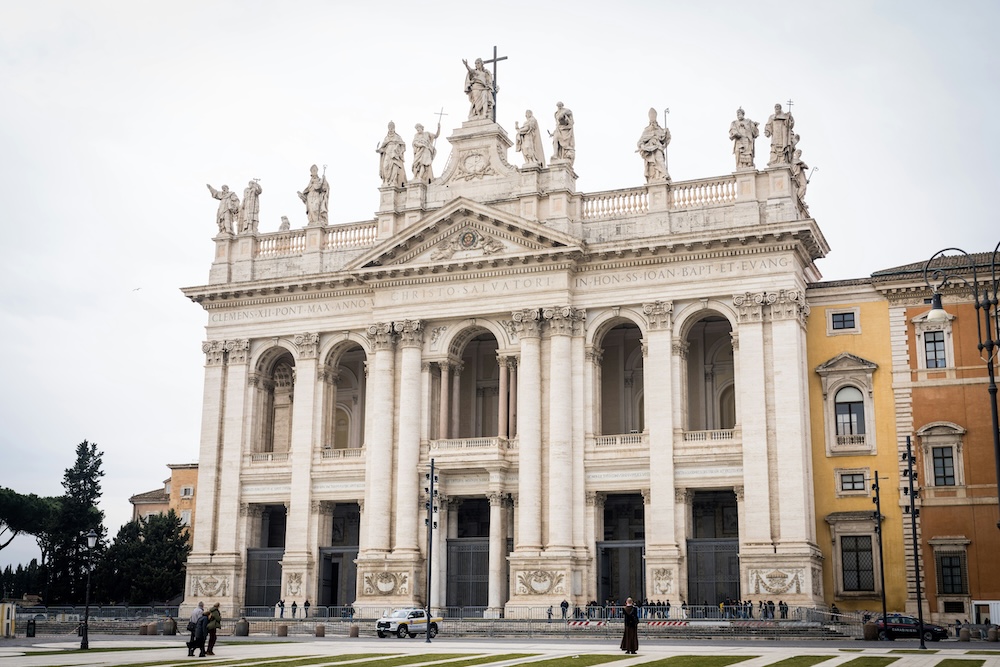
Dear brothers and sisters, today the Church invites us to celebrate the feast of the Dedication of the Lateran Basilica, the cathedral of the Bishop of Rome and the mother of all churches. As we celebrate this feast, let us meditate on the meaning of the Church, the visible sign of unity and love among the disciples of Christ.
In the first reading, we encounter the rich and symbolic vision of the prophet Ezekiel. In his vision, the temple represents the presence of God among His people. From the temple flows a stream of water, a sign of divine grace that comes from God Himself and spreads throughout the world. This water is not ordinary; it is living water, symbolizing the Holy Spirit.
The water that flows from the right side of the temple prefigures the blood and water that flowed from the pierced side of Jesus on the cross. Wherever this water flows, it brings life and healing. Along its banks every kind of fruit tree grows, their leaves never wither, and their fruits never fail. They bear new fruit each month because their water comes from the sanctuary. Their fruits are good to eat, and their leaves bring healing.
Dear brothers and sisters, the grace of God heals and transforms everything it touches, our sins, our wounded relationships, our broken hearts. Through the sacraments of the Church: Baptism, the Holy Eucharist, Reconciliation, and others, God gives us the opportunity to be renewed and transformed into new living creatures. Let us ask ourselves: Do we make use of this grace that God offers us through the Church to be transformed? Often, we take for granted or even abuse the sacred means God has given us. At times, like in today’s Gospel, we may even desecrate or exploit them for selfish gain.
In the Gospel, Jesus discovers that the temple had become a place of business. The materials for sacrifice: sheep, oxen, and doves, were being sold at high prices, and the money changers were taking advantage of the faithful. The temple, meant to be a house of prayer, had been turned into a marketplace. God Himself had been reduced to an instrument for profit. Sadly, this can also happen in our lives. We sometimes instrumentalize God, turning to Him only when we need something, and forgetting Him once we have received it. Or we treat Him merely as a comfort for our sorrows, rather than the Lord of our lives.
Saint Paul, in the second reading, reminds us that our bodies are temples of the Holy Spirit. How often have we desecrated this temple, our own or that of others? This not talking of sexuality but equally the disrespect for human life: using others as objects, harming them, exploiting them, ignoring their suffering, or destroying life through actions such as abortion. Whenever we do these things, we profane the temple of God. The Psalmist proclaims: “God is for us a refuge and strength.” Let us ask the Lord to give us the grace to honor His presence, both in the sacred temple of the Church and in the temple of our own bodies.
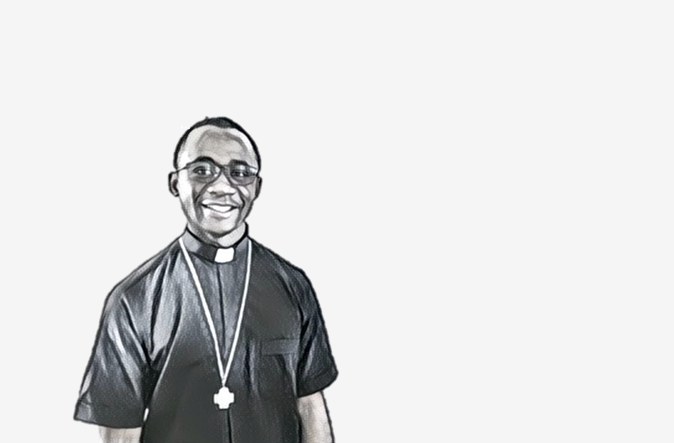
NGALA AUSTIN KANJO
Piarist
Ngala Austin Kanjo is a religious and priest in the Order of the Piarist Schools from the Province of Central Africa. Born in Shisong, Cameroon. He is currently undergoing a master’s program on formation of formators at the Gregorian University.